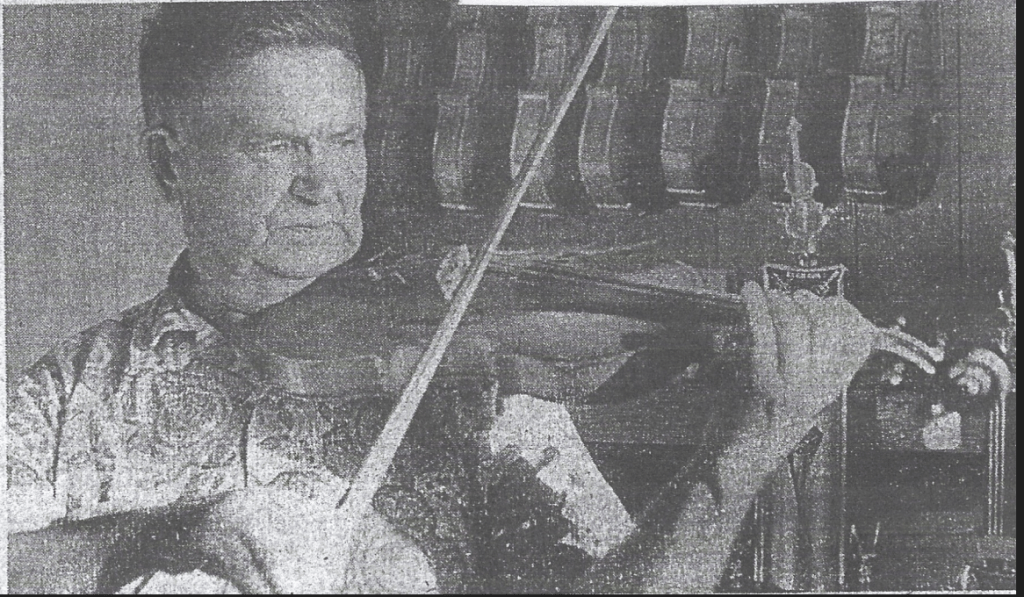
When a lady from Vegreville, Alberta contacted me to ask if I was interested in purchasing a violin made by Frank Seidler, I jumped at the opportunity. Even though the first violin I ever owned was one rebuilt by Frank, I had never actually seen one of his instruments.
Mostly what I remember about him (as I’m sure most Nokomis area residents do) is the man travelling the region in a brown van peddling Familex products. Familex, for those not familiar, was something like Avon or Amway.
Sometime in my university days, I got it in my head that I’d like to play the violin. My Dad ended up buying one for me from Em Felske of Nokomis for the princely sum of $150. It had been restored by Frank in 1965. Though I didn’t keep up with playing, I dragged that fiddle with me for the next 40-odd years. I still have it, and, though I’ll never be the master luthier that Frank was, I’ve had to take it apart to do another repair. Not much to look at, but it is actually quite a good fiddle.
A big thank you goes out to Karen Lee and her daughter Sandra for going to the trouble of digging out a pile of old clippings and articles for me. They were indispensable in putting this blogpost together:
Dymitri Frank Seidler was born in Poland in 1900, in a little village near the Ukrainian border. Because the Polish revolution resulted in the destruction of birth records, he was drafted into the Cossacks at the age of sixteen. Finding the military life too harsh at such a young age, he finally fled and, after an harrowing experience, eventually made it back to his people.
He married and had two children. Deciding to make a new life in Canada, he went on ahead with plans to send for his family once established. The great depression and World War II got in the way, however, and he lost contact with them. He eventually found them, only to learn that his wife and son had been killed. Only his daughter and two of his sisters survived.
Frank started out working in Canada in 1928 as a farm labourer in Ituna, Saskatchewan. He eventually moved to the Nokomis area, where he worked for Foster Morris, James Grigor and Otto Lach. During this time, he purchased a vehicle and began selling Familex products. As a young boy, he had spent some time working with a violin maker and always dreamed of becoming one himself. When funds allowed, he began purchasing materials from the old country and embarked on his violin-making career.
“It takes a long time to make a good violin,” Seidler said. Still, despite a fourteen year period in which he only made 2 instruments, he managed to produce 115 violins in his lifetime. His violins were displayed at Expo 67 in Montreal, and also won first prize for tone at an International Violin and Guitar Maker’s Convention in Mesa, Arizona in 1975.
“Experience taught me more than anything – I’m not gifted in any way that I know of,” Frank said modestly. He took a five week appraisal course in New York and studied ‘lots and lots’ of chemistry in order to make his own varnish. The well-aged wood for his violins was imported from Switzerland. In violin-making, the best woods are spruce and maple grown at high altitudes. The slower growth makes for harder woods and finer growth rings.
Mr. Seidler was known to locals for his sense of humour. During an interview, he raised the fiddle to his chin and drew the bow across the strings. “I can’t play today,” he protested, “I cut my finger on a nail while I was fixing my fence.” Still, he played a little tune.
“I play at it,” he said, apologetically, “but I know tone.”
As a young lad, Rueben Proseilo of Nokomis, Saskatchewan, remembers spending time around the maker as Frank was building violins.
“He was totally self-taught”, says Rueben. “I remember pictures and books of all the Stradivarius violins posted around his workshop. “Even in the 1950’s, his instruments sold for thousands. When he had one finished, he would head to New York, where he would sell to players in the great orchestras.”
Rueben mentioned a curiosity I hadn’t heard before… “Frank said when he was trying to make a sale, he wouldn’t pull the violin out of its case if it wasn’t sunny out.”
“It makes a difference in the sound of the violin,” Frank claimed.
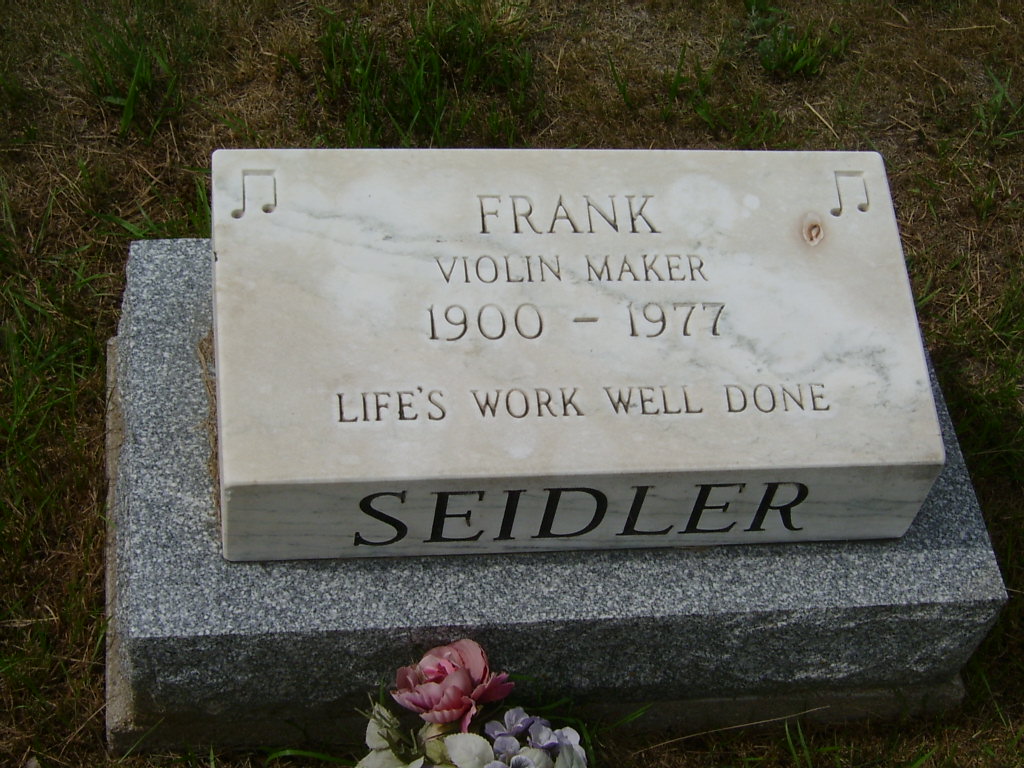
Frank Seidler passed away in May of 1977 and is interred in Nokomis Cemetery.
These are the two violins in my collection that bear Frank Seidler’s mark:
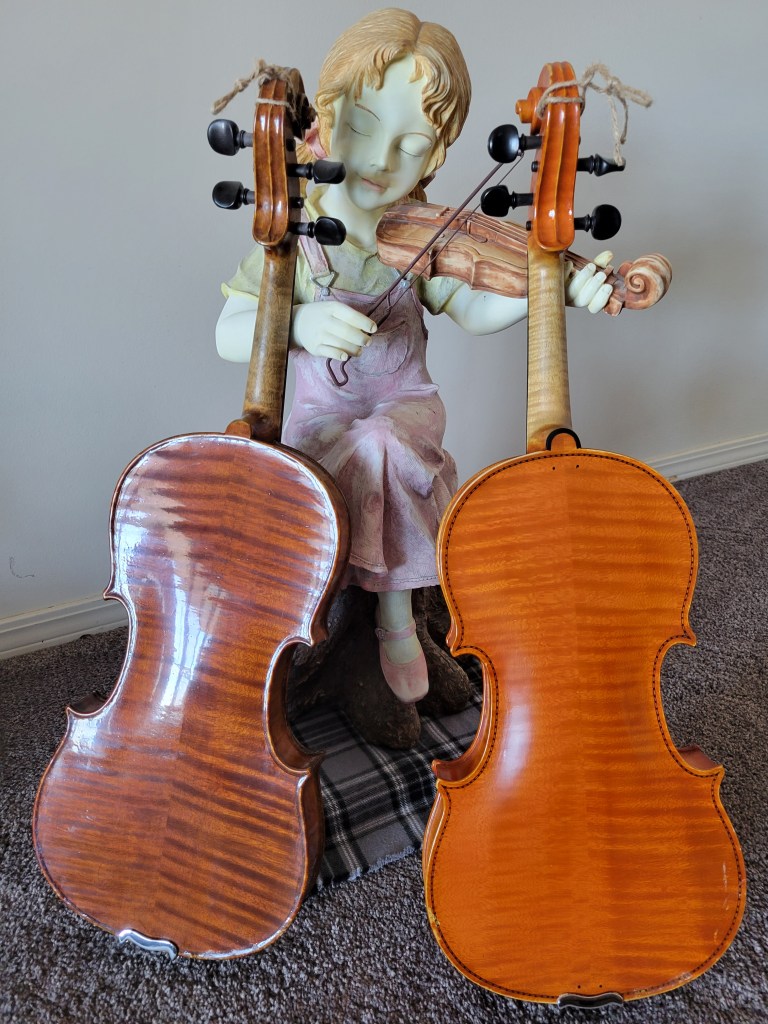
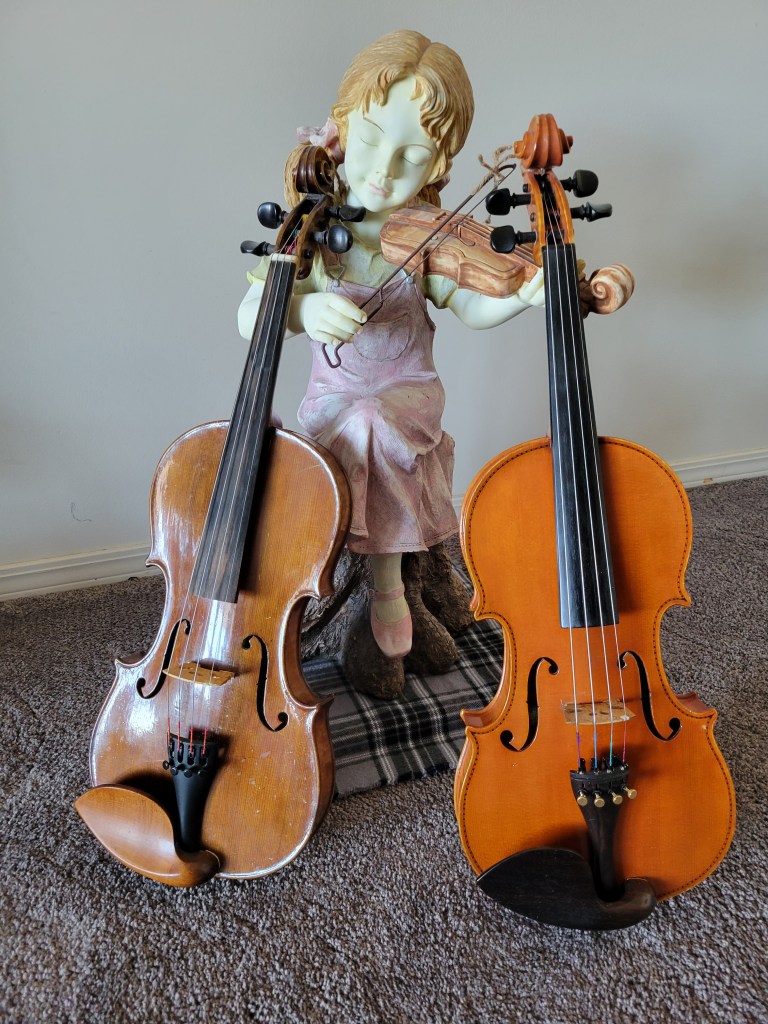
The violin on the left was restored by Frank in 1965 for Em Felske of Nokomis, at a cost of $65. As mentioned, my step-father, Cliff Sather, purchased it for me in about 1978 for $150. The violin on the right with the bright orange varnish was built by Frank in 1975, which means it must have been made near the end of his career.
 The Prairie Fiddler