
This violin project began as the grandaddy of all curiosities. To be honest, it ended that way, too.
When reader Adam McInnes sent this link to me, of course I was intrigued. With nothing but time and old violin parts on hand at the time, I just had to try it. I’ll bet I’m the only fiddle enthusiast in the world to do so.
The Bluegrass Shack in Illinois got this oddity in their shop and posted the following link (non Facebook users may not be able to access):
https://www.facebook.com/watch/?v=2118653085153767&rdid=wUbLFXsy5atx4vIB
I really had nothing to go on but this article, so, working from this screenshot, I made some assumptions.

The original used walnut to make the reeds, but I had easy access to poplar, so made them 1.5 mm x 5 mm, and tried to match the pattern shown.
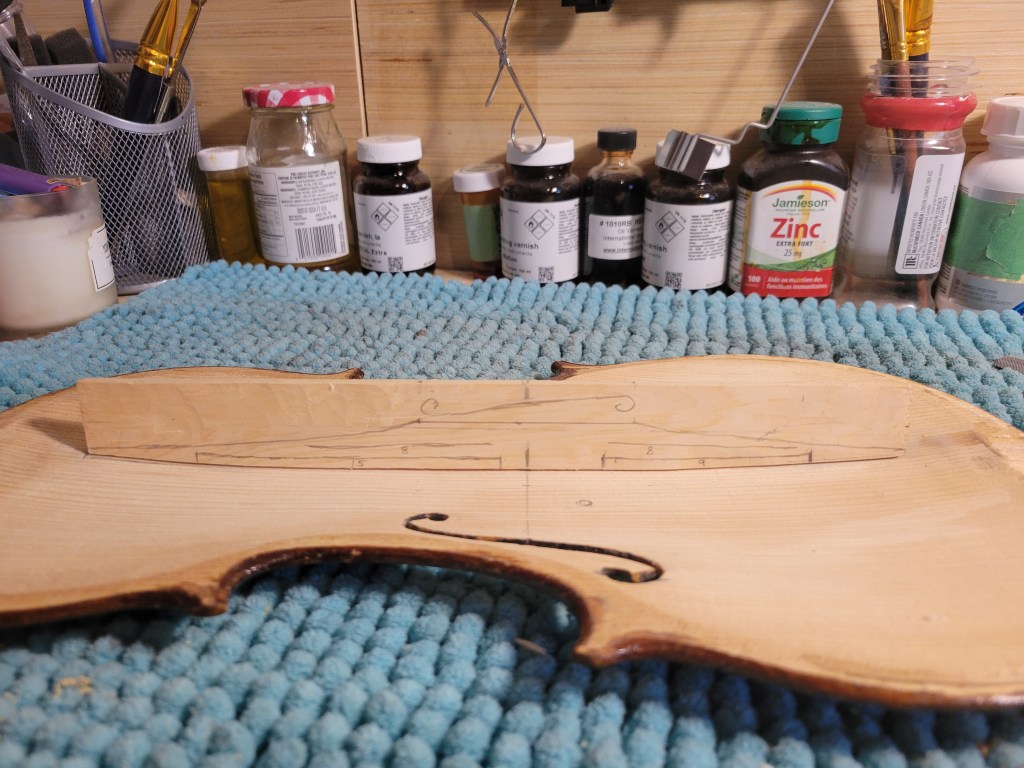


I also decided to make the bass bar slightly heavier than normal. Don’t ask me why, but I thought it might be the thing to do. In retrospect, the reeds could have been a little further apart, but I was careful not to allow them to touch each other or the violin plate. Would have been nicer if they’d been even and straight, but damn that’s hard to do, especially with a bit of warping and distortion.
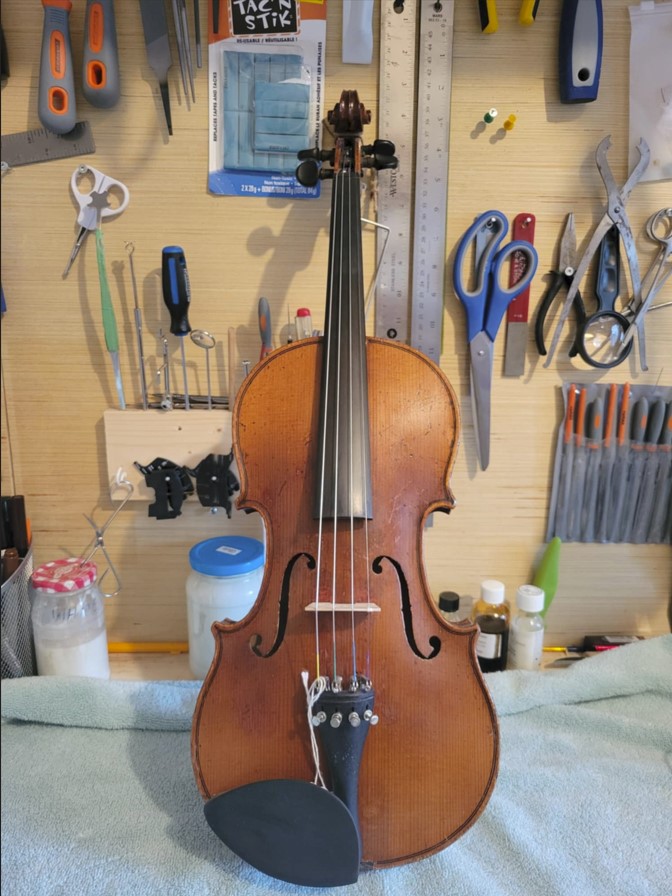
With all said and done, of course it looks like any other violin. It’s hard to say what kind of resonance and volume the violin had in its original state, but it definitely seems to have a powerful bass now.
It’s anyone’s guess as to who made the original bass bar modification. In the ‘old days’ of barn dances, contra and square dances, I’m sure players tried everything they could to boost the volume. Maybe that was the impetus.
If anyone has any information or comments, I’d love to hear!
 The Prairie Fiddler